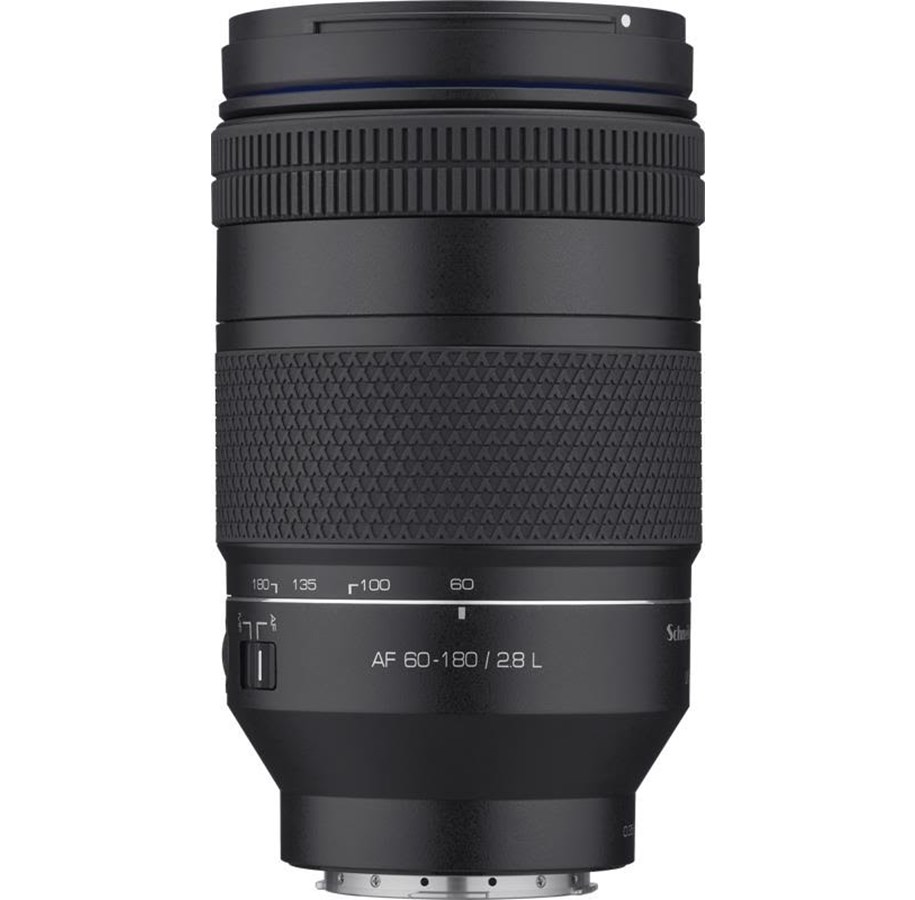
Samyang AF 60-180mm F2.8 LThe Samyang AF 60-180mm F2.8 L is the fast telephoto you actually bring along. Constant F2.8 across the whole range at 727.8 grams, roughly half the weight of a conventional 70-200mm F2.8, so it stays on the camera through a full wedding day or a week of travel. The 60-180 mm range covers portraits, events and stage work, and it focuses down to 0.35 m for details other telephoto zooms cannot reach. Weather-sealed, quick to handle, and built with Schneider-Kreuznach.What you can shoot with itThe 60-180 mm range covers most of the everyday telephoto work: full-length and head-and-shoulders portraits, ceremonies and speeches from the back of a room, stage and concert light, street and travel scenes, details of food and products, and pack shots. At 180 mm you get the compression that separates a subject from a busy background. At 60 mm the frame is wide enough for a full-length portrait or a group without stepping back into the wall behind you, which is where a 70 mm wide end often runs out. A minimum focusing distance of 0.35 m and 0.26x magnification let you move in on textures, rings, plated food and small products without swapping to a macro lens.Compared to a conventional 70-200mm F2.8The specification most people react to is weight. Constant F2.8 zooms in the 70-200 mm class typically pass 1.3 kg, so the AF 60-180mm F2.8 L saves well over half a kilo before you add the camera. It is also shorter, 147 mm against the roughly 180 to 210 mm those lenses measure, and it takes 77 mm filters, so it shares a filter size with much of the rest of the bag.You give up 20 mm at the long end. For sports from the sideline or wildlife that matters. For portrait, event, travel and documentary work the difference between 180 mm and 200 mm is a small step forward. In exchange you gain 10 mm at the wide end, closer focusing than most 70-200 mm designs allow, and a lens you keep on the camera rather than in the bag.Key pointsConstant F2.8 through the whole zoom range, no exposure shift while zooming727.8 grams, roughly half the weight of a conventional 70-200mm F2.80.26x magnification at 0.35 m minimum focusFloating focus system for consistent sharpness from close focus to infinityLinear STM autofocus, AF/MF switch and customisable focus hold buttonWeather-sealed barrel, 77 mm filter threadOptical construction17 elements in 14 groups, including seven ED elements, two aspherical elements and one high-refractive element, all with UMC coating. A floating focus system holds image quality from the minimum focusing distance to infinity, so close-range work stays as sharp as the far end.In the box:Samyang AF 60-180mm F2.8 LLens hoodFront and rear capinstruction manual